


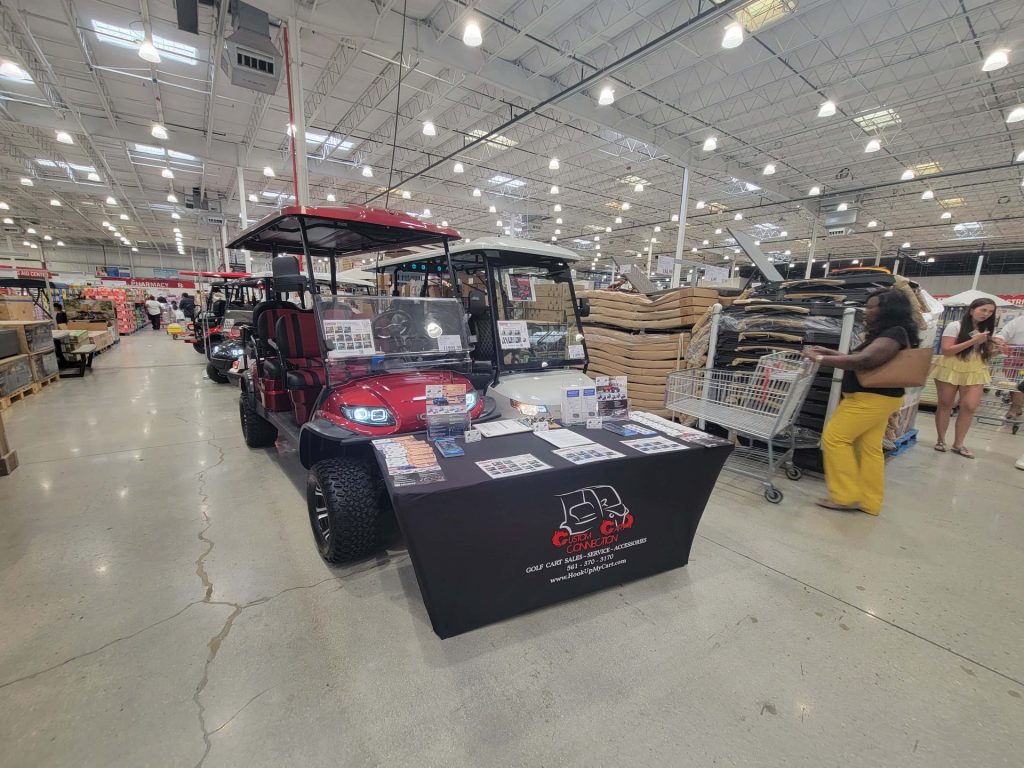
Purchasing a golf cart from a box store like Home Depot, Lowe’s, Costco, or Walmart might seem like a convenient and budget-friendly option, but it comes with significant risks that could leave buyers stranded. While the shiny displays and competitive prices are tempting, the lack of service, support, and employee expertise, combined with the inability to test drive, makes these purchases a gamble.
One of the biggest drawbacks is the lack of after-sales service and support. Box stores are designed for high-volume sales of general merchandise, not specialized vehicles like golf carts. Once you’ve made your purchase, you’re often on your own. If the cart breaks down or needs maintenance, these retailers typically don’t offer repair services or carry replacement parts. Unlike dedicated golf cart dealerships, which provide warranties, service plans, and technical expertise, box stores leave buyers to navigate repairs through third-party mechanics, which can be costly and time-consuming. For a vehicle meant for regular use, this lack of support is a major red flag.
Equally concerning is the limited product knowledge of box store employees. Staff at Home Depot or Walmart are generalists, not golf cart experts. They may not know the difference between electric and gas-powered models, battery life expectations, or weight capacities. This lack of expertise means buyers might end up with a cart unsuited to their needs—whether it’s for golfing, neighborhood cruising, or utility tasks. Without informed guidance, you’re left relying on product packaging or online reviews, which may not tell the full story.
A shiny exterior can also be deceptive. Just because a golf cart looks good on the showroom floor doesn’t mean it’s built to last. Box stores often stock lower-end models designed to hit a price point, not to deliver durability or performance. These carts may lack robust frames, reliable batteries, or weather-resistant features, leading to premature wear and tear. Without the ability to inspect the cart’s mechanics or compare brands in-depth, buyers risk investing in a lemon.
Perhaps the most critical issue is the inability to test drive. Golf carts aren’t like lawnmowers or tools—you need to feel how they handle, accelerate, and brake. Box stores don’t offer test drives due to space constraints and liability concerns, so you’re buying blind. A test drive at a dealership reveals quirks like poor turning radius or uncomfortable seating, saving you from a costly mistake.
In short, buying a golf cart from a box store is a high-risk move. The lack of service, employee expertise, and test-drive opportunities outweighs the convenience. For a reliable purchase, visit a specialized dealer where you can drive, compare, and secure ongoing support. Your wallet—and your golf family—will thank you.